

Pride Flags fly in spite of Utah Legislature’s ban
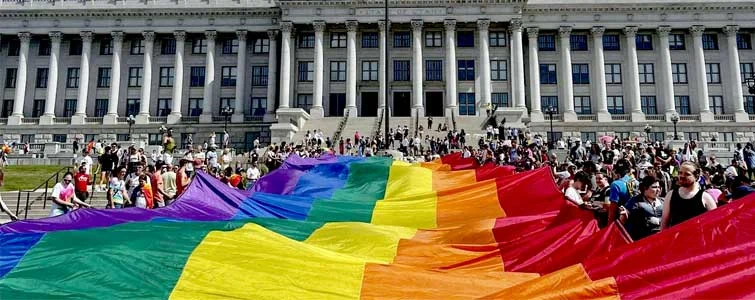
In a bold act of defiance against the Utah Legislature’s recently passed bill banning Pride flags from government-owned property, Salt Lake City Mayor Erin Mendenhall and the Utah Pride Center have taken a stand, affirming their unwavering support for the LGBTQ+ community. As hundreds of protesters gathered at the Utah State Capitol on Friday, they unfurled a massive 200-foot rainbow banner on the building’s steps, sending a powerful message of resistance against H.B. 77.
The bill, which passed with a 49-20 vote in the House and a 21-8 vote in the Senate, restricts public schools and government buildings to flying only sanctioned flags, including national, state, school, Olympic, and certain military-related flags. Gov. Spencer Cox has indicated he will not veto the bill, ensuring its likely enforcement. Violations could result in fines of $500 per day if non-sanctioned flags remain displayed beyond the designated removal period.
In response, Mayor Mendenhall ordered the Salt Lake City/County Building to be illuminated in rainbow colors and the Pride flag to fly from its flag poles. Her office released a statement reaffirming the city’s commitment to supporting LGBTQ+ residents: “Supporting our LGBTQ+ community is always a priority for us. We’re planning to keep our Pride flag and lights up through May until we are no longer permitted to do so.”
The protest at the Capitol was swiftly organized by the Utah Pride Center, which provided the 200-foot flag unfurled by demonstrators. The Center, a key advocate for LGBTQ+ rights in the state, sees the bill as part of a broader, national movement aimed at suppressing queer visibility. Many activists and legal experts argue that the legislation not only stifles free expression but also removes critical symbols of support for LGBTQ+ students and community members.
The Utah ACLU has already expressed concerns about the bill’s constitutionality, warning that it sets a dangerous precedent for further restrictions on LGBTQ+ rights.

“This bill is nothing more than a thinly veiled attempt to erase the visibility of LGBTQ+ people in Utah,” said Sam Ames, an LGBTQ+ rights advocate. “We’ve seen these kinds of measures across the country, and they always have one goal: to push queer and trans people back into the shadows.”
Supporters of the bill claim it is an effort to ensure schools focus on education rather than political or ideological displays. Corinne Johnson, founder and president of Utah Parents United, a conservative “parents’ rights” group that opposes LGBTQ+-inclusive policies in schools, stated, “We are setting our Utah schools back on a course to focus back on what matters most to parents and students, which is student success.”
However, LGBTQ+ advocates argue that removing Pride flags from schools sends a harmful message to queer youth, many of whom already face heightened levels of bullying and mental health challenges. Teachers and students alike have voiced their opposition to the measure, with some educators vowing to defy the law.
One teacher, J. Ryan Waddoups, made his stance clear in a public letter to state Republicans. “You will have to fire me before I take down my Pride flag,” he wrote. “It serves as a symbol to our LGBTQ youth that they are loved, supported, and accepted unconditionally.”
During a Zoom call with the far-right group Utah Citizens for the Constitution, Lee expressed his determination to push forward with restrictions on LGBTQ+ symbols in public spaces. The lawmaker also signaled a willingness to expand these measures in the future, should educators or public officials find ways to work around them.
“If this doesn’t fix those problems, and we are seeing teachers start to push pins and stickers and banners, it’s going to be really easy to go back next year and say, you knew what we were doing with this bill. You knew what we were trying,” Lee said in the call made public by Utah Political Watch. “It will be really easy to go back next year and just make a more blanket ban on other items if we can’t get this done through just the flag. The flag is a big one and an easy one to do.”
Aaron Welcher, director of communications for the ACLU of Utah, condemned Lee’s remarks, arguing they expose the true intent behind the bill.
“From the start, we’ve said HB77 isn’t about protecting personal freedoms — it’s about control,” Welcher warned. “Rep. Lee’s obsession with banning Pride symbols makes it clear: this isn’t just about flags, but about othering and erasing LGBTQ+ people from public life. Today, it’s Pride flags. Tomorrow, it will be broader restrictions on speech, education, or expression for anyone the state deems unacceptable.”
“We will not be erased,” said Sue Robbins, a board member of Equality Utah. “The rainbow flag isn’t just fabric; it represents hope, love, and the promise that every person deserves dignity and respect. We will keep fighting to ensure that message remains visible for all.”
London Skies, a trans woman and protester at the capitol told local media, “I actually feel really safe when I go into a neighborhood and I see a trans flag because I know that I have an ally, somebody that is supportive. Especially as a trans woman, there’s so much violence against us. When you see that, it makes you feel like if something did happen, I know that there’s someone on my side who would stand up for me.”
This isn’t the first attempt by Utah lawmakers to restrict the display of Pride flags. A similar bill failed in the state legislature last year, but this time, Republican lawmakers expanded the ban to include all government properties rather than just schools. Nationally, restrictions on Pride flags have become a growing trend among conservative lawmakers, with similar bans enacted by the U.S. Departments of Defense, State, and Veterans Affairs under President Donald Trump’s administration.
As the deadline for flag removals looms, Utah’s LGBTQ+ community remains steadfast in their resistance. The question now is whether legal challenges or further public pressure might overturn the controversial legislation. Until then, the rainbow lights of Salt Lake City’s City/County Building will continue to shine, a beacon of resilience in the face of adversity.
At press time, Cox had yet to sign the bill on his desk. If he does not sign or veto the bill by Monday, March 24, the bill will automatically become law.


