Former Kentucky clerk Kim Davis asks Supreme Court to revisit same-sex marriage ruling
Nearly a decade after the U.S. Supreme Court’s landmark 2015 Obergefell v. Hodges decision legalized same-sex marriage nationwide, the high court is being asked to reconsider that ruling.
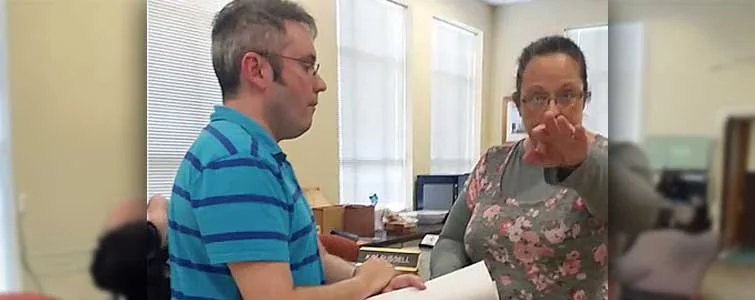
The request comes from Kim Davis, the former Rowan County, Kentucky clerk who gained national attention in 2015 for refusing to issue marriage licenses to same-sex couples. Davis cited her religious beliefs, stopped issuing all marriage licenses, and ultimately spent six days in jail for contempt of court.
Two men denied a license, David Ermold and David Moore, sued Davis for violating their constitutional rights. Lower courts have ruled against her, and she has been ordered to pay hundreds of thousands of dollars in damages and legal fees.
In a petition filed with the Supreme Court, Davis, represented by the conservative legal group Liberty Counsel, argues that the First Amendment’s Free Exercise Clause should shield her from personal liability. Her attorney, Matthew Staver, has called the Obergefell decision “egregiously wrong” and is urging the justices to overturn it, saying marriage rights should return to the states.
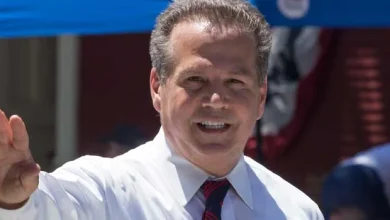
The Obergefell decision built on earlier legal milestones in marriage equality, including one from Utah. In December 2013, U.S. District Judge Robert J. Shelby became the first judge in the nation to strike down a state’s same-sex marriage ban after the Supreme Court’s U.S. v. Windsor ruling overturned part of the federal Defense of Marriage Act. Shelby found Utah’s 2004 voter-approved constitutional amendment and related statutes defining marriage as between a man and a woman unconstitutional, ruling they violated the 14th Amendment guarantees of equal protection and due process. His decision sparked a wave of similar rulings across the country, paving the way for Obergefell.

Legal experts see little chance the court will use Davis’ case to dismantle nationwide marriage equality. Northeastern University law professor Daniel Urman told Newsweek that while Justices Clarence Thomas and Samuel Alito have expressed interest in revisiting Obergefell, other conservatives on the court such as Chief Justice John Roberts and Justices Neil Gorsuch, Brett Kavanaugh, and Amy Coney Barrett may be reluctant to strike down a right that has become embedded in American life and enjoys broad public support.
Public opinion polls show support for same-sex marriage remains high, though slightly lower than last year. Gallup reported in May 2024 that 69 percent of Americans support legalization, compared to 71 percent in 2023. Support remains highest among Democrats (83%) and independents (74%), but is below 50 percent among Republicans.
In January, Idaho lawmakers approved a non-binding resolution declaring their rejection of the U.S. Supreme Court’s ruling in Obergefell v. Hodges and urging the Court to “restore the natural definition of marriage” as the union of one man and one woman.
If overturned, existing same-sex marriages would remain valid, but each state would once again decide the future of new same-sex marriages. Utah’s 2004 voter-approved constitutional amendment banning same-sex marriage, struck down by Judge Shelby in 2013, remains on the books. While it is unenforceable under current federal law, an end to nationwide protections could allow it to take effect again unless state lawmakers or voters act to repeal it.
Davis’ case has been rejected by lower courts multiple times. A federal appeals panel earlier this year ruled that the Free Exercise Clause does not protect her because she is being held liable for state action as a public official. The Supreme Court previously declined to hear her appeal in 2020.

If the court does take up her case, legal analysts believe it is more likely to focus on the narrower question of whether government officials can claim religious exemptions from duties related to same-sex marriage rather than overturning Obergefell outright.
The justices are expected to decide in late September whether to hear the case.